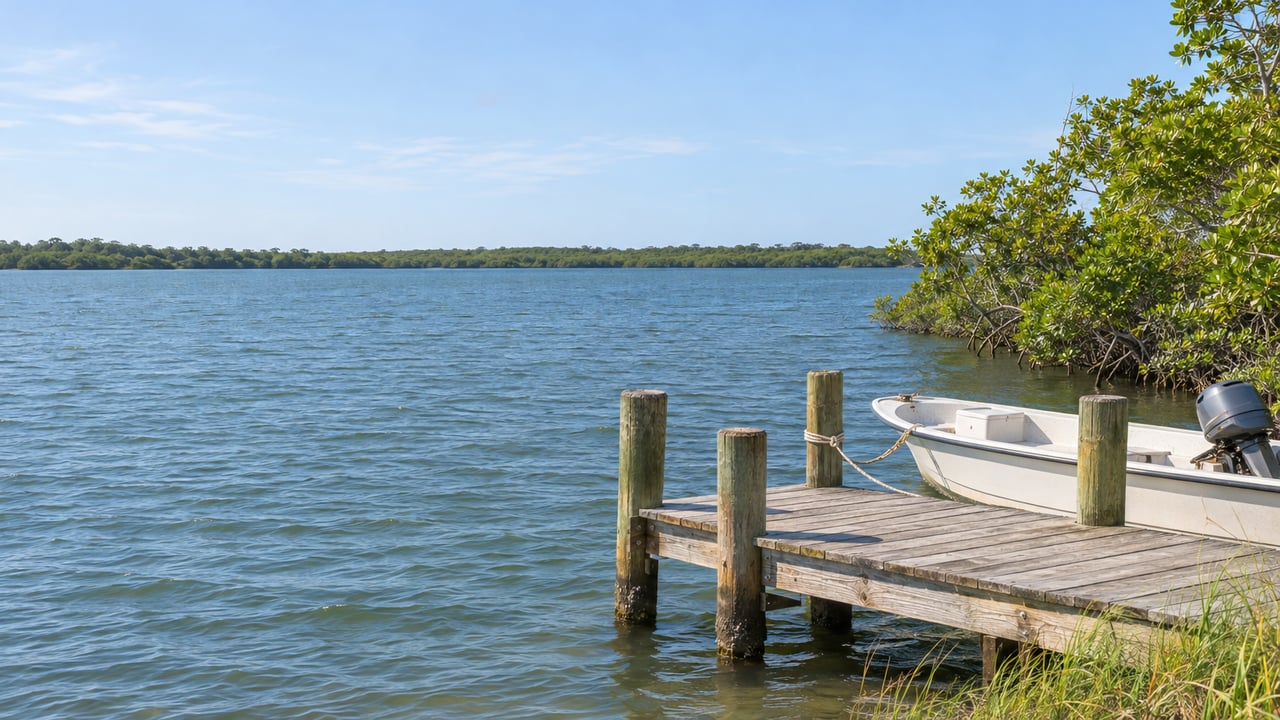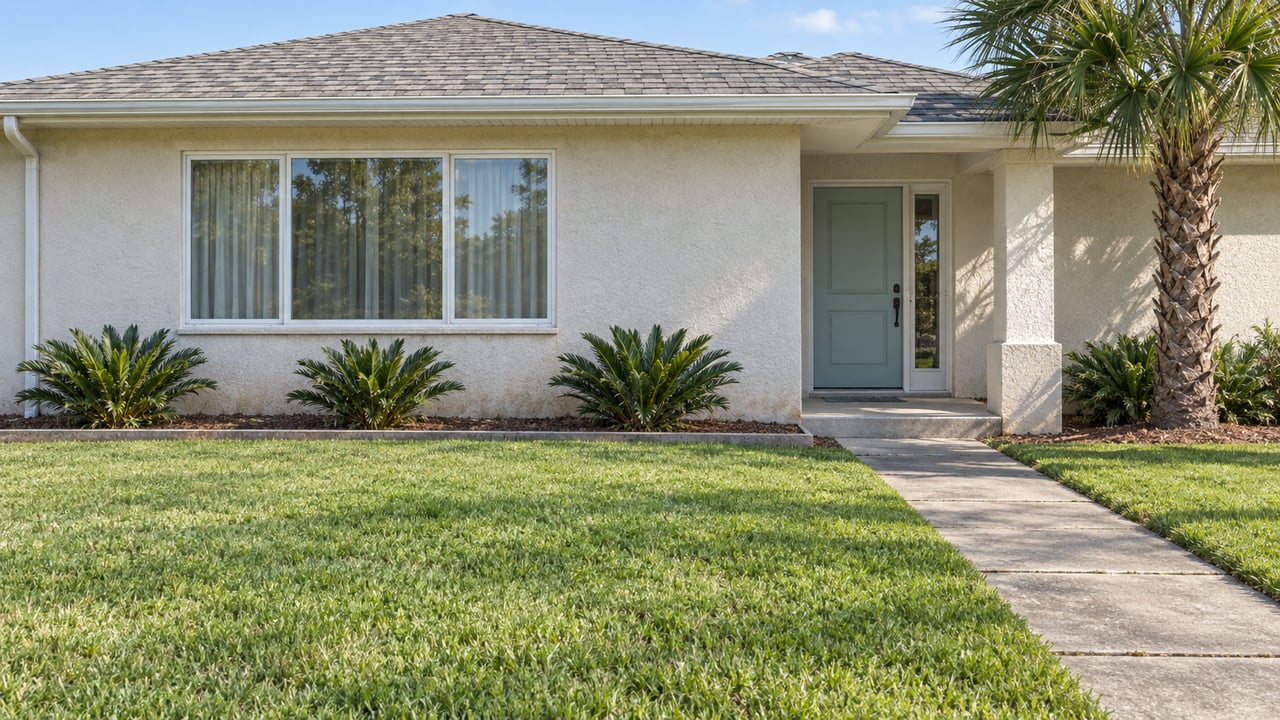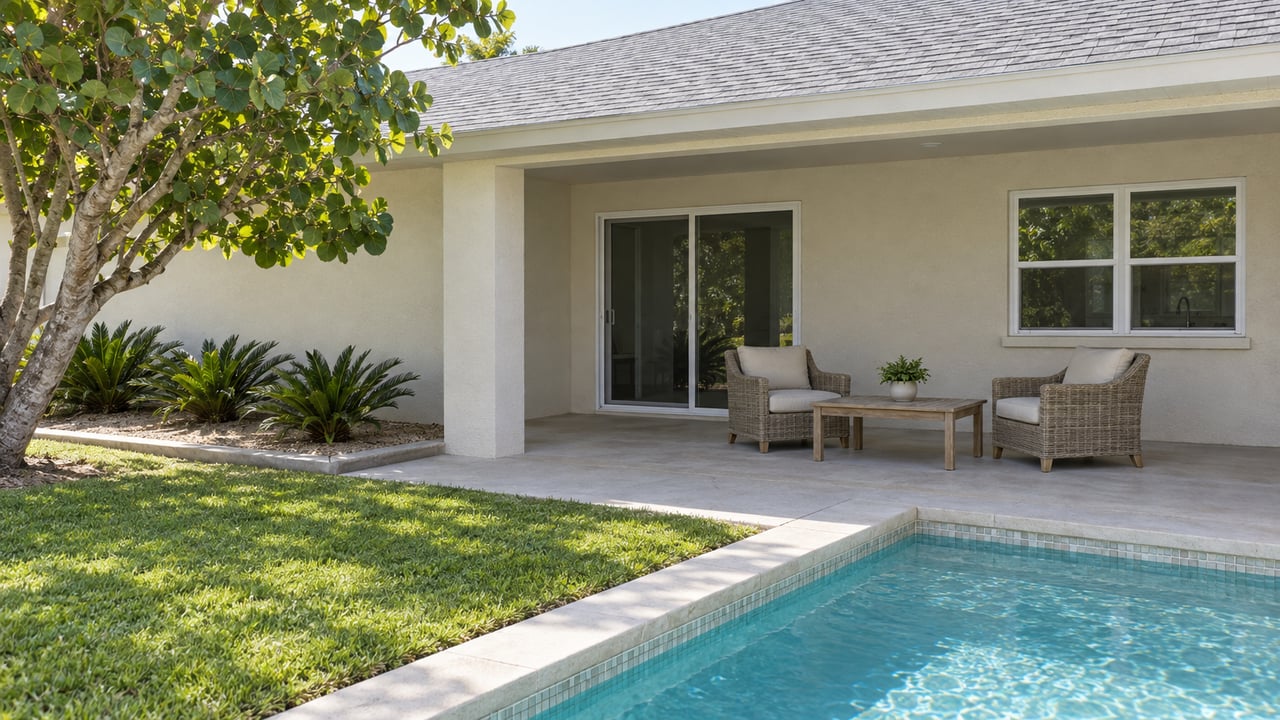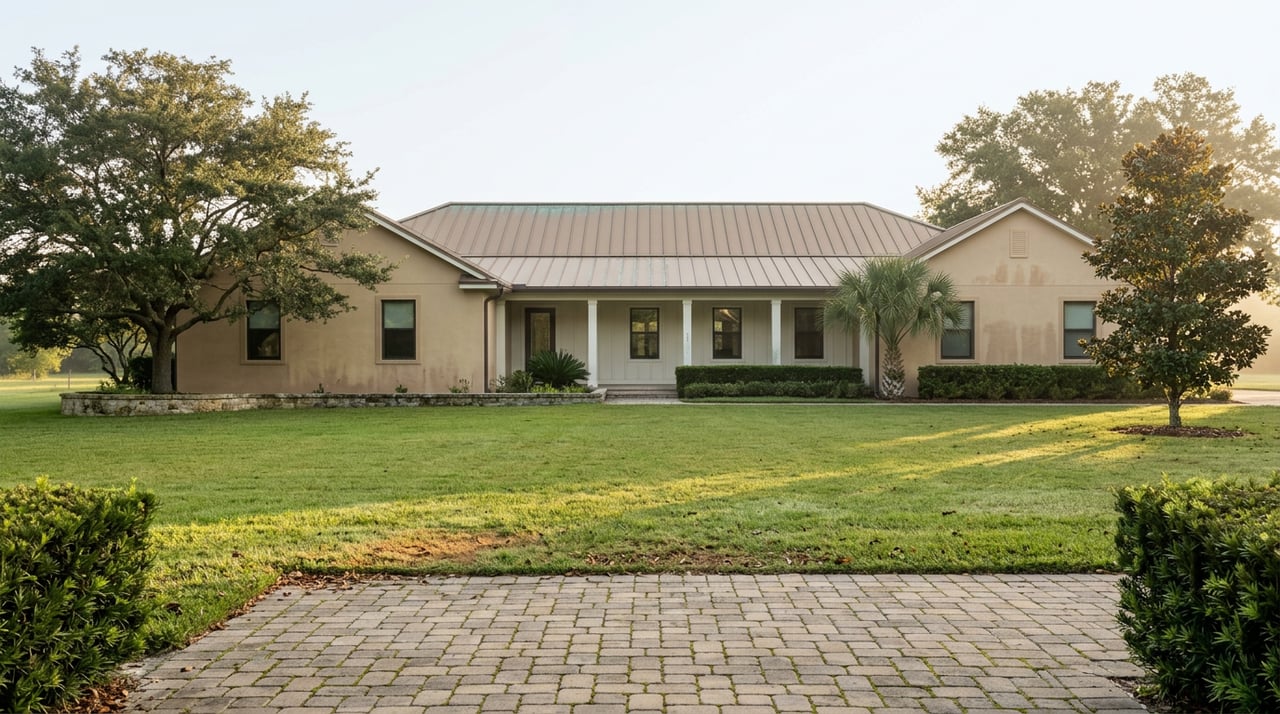
Picture two listings in Grant-Valkaria this fall. Both sit on quiet dirt roads off Valkaria Road. Both have a well, a septic tank, a horse barn, and an asking price within a few thousand dollars of each other. A buyer scrolling through photos would call them nearly identical. As ClickOrlando reported, under a law that took effect July 1, 2026, they are not.
One sits on 8 acres. The other sits on 11. That three-acre gap now decides whether the seller's septic system falls under a state mandate to connect to sewer or upgrade to a nitrogen-reducing system by 2035, or whether it faces no such deadline at all.
That is the story most price research misses in a town like this one. Grant-Valkaria has always sold on space rather than square footage, and buyers moving here from denser parts of Brevard are usually comparing prices per acre, not asking what a specific acreage number now means for the years after closing. This spring's legislative session changed that math for anyone weighing a large-lot purchase near the Indian River Lagoon.
The Line the State Just Redrew
For years, Florida's Indian River Lagoon Protection Program applied one rule to every septic-equipped property inside its boundary, regardless of size. Brevard County says properties had to connect to central sewer if it was available, or upgrade to a system that cuts nitrogen output by at least 65 percent by July 1, 2030. Grant-Valkaria sits inside that boundary, which is why local inspectors have been flagging the requirement to buyers and sellers here for months.
This year, the legislature revised that rule. House Bill 1417, signed by Governor Ron DeSantis and effective July 1, 2026, limits the mandatory sewer-connection or septic-upgrade requirement to residential and commercial properties of 10 acres or less. Properties larger than that are no longer subject to the mandate at all. For the parcels that still qualify, the deadline itself moved, from 2030 out to 2035.
That is not a small technical adjustment. It is a new dividing line drawn straight through the kind of inventory that defines this town.
Why the Line Falls Right Through Grant-Valkaria
Grant-Valkaria was built around big parcels, not subdivisions. The town's own government describes dirt roads that get graded once a month rather than paved, and septic permitting that still routes through Brevard County rather than town hall. Homes here regularly sit on multiple acres, often with a barn, a pasture, or citrus trees, and they almost always rely on a private well and septic system instead of municipal utilities.
That pattern means the 10-acre threshold is not an edge case for this market. It is a coin flip. A buyer looking at two properties with similar bedroom counts and similar prices could easily be looking at one home that must budget for a sewer connection or an advanced septic system before 2035, and another that carries no such deadline under current law. Nothing on a listing sheet flags that difference. It only shows up once someone pulls the plat and measures the parcel.
By July 1, 2030, any commercial or residential property with an existing septic system within the Indian River Lagoon Protection Program area had to connect to central sewer or upgrade to a system achieving at least 65 percent nitrogen reduction. The 2026 revision narrows that requirement to properties of 10 acres or less and pushes the deadline to July 1, 2035.
The reasoning behind the original rule is worth understanding, because it explains why the county still cares even after the acreage carve-out. A conventional septic tank only removes about 30 to 40 percent of the nitrogen in household wastewater. Brevard County's own data shows septic systems near the lagoon or a connected waterway do outsized damage, with systems close to the water contributing the large majority of septic-related nitrogen pollution. That is the water-quality problem the law was written to address. The new acreage cutoff does not change the science. It changes who is legally required to act on it right now.
The Money Question Underneath the Acreage Line
For the properties that still fall under the mandate, Brevard County has a funding program to soften the cost. The Save Our Indian River Lagoon program offers grants up to $20,000 per parcel toward an advanced septic upgrade, with the amount tied to how much nitrogen a given property is estimated to send toward the lagoon.
That formula has created its own uneven landscape within the county, separate from the acreage question. A Central Florida Public Media report on a nearby Brevard neighborhood described one property estimated to send 27 pounds of nitrogen into the lagoon each year, which qualified for the full $20,000 grant, sitting next door to a home emitting just 3 pounds, which qualified for roughly $2,500 under the old formula. Two houses that looked the same from the street landed on opposite ends of the funding scale.
In December 2025, the Brevard County Board of County Commissioners approved a minimum cost-share of $6,000 for any eligible property in the program area, regardless of its nitrogen estimate, as a trial adjustment meant to close that gap. The county's online Septic Mapper tool lets a homeowner check what a specific parcel qualifies for before committing to any work, and that same tool covers eligible Grant-Valkaria properties as much as it does anywhere else in the county's mapped area.
Put the two mechanisms together and the picture for a Grant-Valkaria buyer gets more specific. A parcel of 10 acres or less inside the program area may face a real deadline, but also real grant money to help meet it. A parcel over 10 acres faces no deadline under the current law, which means no mandate to trigger the grant process either, at least for now. Buying the larger lot removes a compliance question. It does not automatically remove the environmental one, since the county's broader restoration plan and its funding priorities can still shift.
What Actually Changes at the Closing Table
The 2026 revision also added a disclosure piece that touches real estate transactions directly. The Florida Senate analysis says that where a septic system requires an operating permit, which includes many of the advanced, nitrogen-reducing systems the lagoon rules require, the law now requires a disclosure statement at or before the transaction that clearly identifies the property as subject to septic system regulations. The bill also requires that when a property with such a system changes hands, the new owner provide written notice and proof of ownership so the operating permit can be updated in their name.
For a buyer, that means asking early whether a property's septic system carries an operating permit, and if so, confirming that permit will transfer cleanly. For a seller with one of these advanced systems already installed, it means the disclosure conversation with a buyer starts earlier than it used to, not later.
None of this changes the appeal of Grant-Valkaria itself. Prices here have been climbing along with buyer interest in space and privacy. In the three months ending July 2026, the median sale price in the town's Florida Indian River area reached $599,000, up roughly a quarter from the same period the year before. That kind of demand is exactly why the acreage detail matters now more than it did before this law passed. Buyers are paying more to be here, which makes it worth knowing precisely what they are buying into.
A Few Questions Worth Asking Before You Tour
Does the 10-acre exemption mean a larger property never needs septic work? No. It means the state mandate to connect to sewer or upgrade by a fixed deadline does not currently apply. A septic system on any size lot can still need repair,
What if a lot measures close to 10 acres? Get the exact platted acreage before assuming either way. The threshold is a hard line in the statute, and a survey or the county property appraiser's record will settle it faster than an online listing description.
Does this affect a private well too? The 2026 law is specific to septic and sewer requirements. A well on the same property is worth its own inspection regardless of where the parcel falls on the septic timeline.
Grant-Valkaria rewards buyers who ask the second question after the price, not just the first one. Troy and Kelli Alexander spend a lot of time on exactly these kinds of details with clients moving into Brevard's more rural corners, because the number on the sign is rarely the whole story out here. If you are comparing acreage, wells, and septic systems anywhere on the Space Coast, The Alexander Team can walk through what a specific parcel actually means for your closing and your years after it.
This article is general information, not legal, tax or financial advice. Consult a qualified professional about your situation.